Where to Buy CJC-1295 + Ipamorelin in the Philippines: A Research Buyer's Guide
Where to buy the CJC-1295 and Ipamorelin blend in the Philippines for research: how to vet a supplier, read a two-peptide Certificate of Analysis, check HPLC purity, and store it correctly. BodyPharm, research use only.
The CJC-1295 and Ipamorelin blend is a staple of growth-hormone research, and its popularity has bred a familiar problem: plenty of sellers will list a two-peptide vial without ever proving what is inside it. A blend is harder to verify than a single compound, because now two peptides have to be correct, and a lazy supplier can hide a shortfall in either one. If you are sourcing this pairing for research, the real question is not just where to buy CJC-1295 and Ipamorelin, but how to tell whose paperwork actually accounts for both.
This guide covers what each peptide is, why the two are studied together, the documents that separate real material from a hopeful label, how to read a blend without a chemistry degree, and what a fair price looks like. Everything below is written for laboratory and research use only.
What CJC-1295 and Ipamorelin actually are
These are two different tools that act on two different pathways, which is the whole reason they end up in the same vial. CJC-1295 (No-DAC), also known as Modified GRF 1-29, is a growth-hormone-releasing hormone (GHRH) analogue. It works on the GHRH receptor, the same receptor the body's own GHRH targets to signal a release of growth hormone. Ipamorelin is a different animal: a selective growth-hormone secretagogue that acts as a ghrelin-receptor agonist, the class often shortened to GHRP. One nudges the GHRH pathway, the other nudges the ghrelin pathway.
The "No-DAC" part matters and is worth getting right. DAC stands for Drug Affinity Complex, a modification that binds the peptide to albumin in the blood and drags its half-life out to days. No-DAC has no such complex, so it clears far faster and produces a shorter, more pulsatile signal rather than a sustained one. Researchers pick No-DAC precisely when a pulsatile profile is the point. Ipamorelin, for its part, is noted in the research literature for being relatively selective, showing less effect on cortisol and prolactin than the older GHRPs it followed. That relative cleanliness is a large part of why it became the default GHRP for pairing.
Why they are studied as a blend
Because the two peptides act on separate receptors, they are researched together for a synergistic, pulsatile pattern of growth-hormone release that neither reliably produces alone. A GHRH analogue and a GHRP pull on different levers of the same system, and the research interest lies in what happens when both levers move at once. The No-DAC version of CJC-1295 is the one usually chosen for this pairing, since its short, pulsatile profile lines up with the burst-style signalling the combination is studied for. Put a sustained-release DAC version in the same vial and you are studying a different question entirely.
None of that is a health claim. It is the rationale from the literature for why the two compounds share a vial, and it is the reason a blend, rather than two separate bottles, is what most researchers actually source.
The two things that actually matter: purity and identity
Strip away the marketing and two questions decide whether a blend is usable. Is it pure, and is it actually both peptides in the ratio the label claims? Those are separate questions, answered by separate tests, and a blend makes both harder than a single compound does.
Purity comes from high performance liquid chromatography (), which separates everything in the sample and reports each fraction as a percentage. On a blend, a good HPLC trace shows two clean peaks, one for CJC-1295 and one for Ipamorelin, not a single smear. Identity comes from (MS), which weighs each molecule and confirms both match their expected masses. The critical point for a blend: the CoA has to account for both peptides, separately. A single purity number with no breakdown tells you nothing about whether one of the two is underdosed or missing. You want each peptide named, measured, and confirmed, tied to the specific batch you are being sold.
How to read a blend CoA in under a minute
A Certificate of Analysis (CoA) is the lab report for one production batch. You do not need to be an analytical chemist to check one, but a blend needs an extra look. Run down this list:
- A batch or lot number that matches the vial you are buying. A generic CoA for "CJC-1295 / Ipamorelin" in the abstract is not a CoA for your material.
- Both peptides named on the report. If the document only mentions one of the two, it is not a CoA for a blend, whatever the listing says.
- An HPLC purity figure for the peptide content, stated as a percentage rather than a vague "high purity" line. For research-grade material, anything under about 98 percent is worth a second look.
- Mass spectrometry results confirming the molecular weight of each peptide. This is the identity half of the job, and on a blend it has to be done twice.
- A test date and the testing lab's name. A recent date and an independent, third-party lab mean someone with no stake in the sale actually did the work. Our full CoA walkthrough goes line by line if you want the detail.
The name that comes up most in this space is Janoshik Analytical, a European lab used widely across the research peptide industry because its reports can be checked through its own portal. A Janoshik report you can independently look up beats an unbranded PDF you simply have to take on trust, and on a blend that independent check is worth twice as much.
Storage and handling, briefly
The blend ships lyophilised, freeze dried into a small pellet or film. In that state both peptides are reasonably stable, but neither is indestructible. Keep unopened vials refrigerated at 2 to 8 degrees Celsius and out of the light. Once reconstituted with bacteriostatic water, the material has to stay refrigerated and be used within a few weeks. Peptides like these are not fond of heat, so material left on a courier's dashboard for two days is how a clean CoA turns into disappointing bench results. Shipping practice matters as much as the paperwork.
What a fair price looks like
Price is a signal, and the loudest version of that signal is the listing far cheaper than everyone else. Making a genuinely pure two-peptide blend and paying an independent lab to test both components costs money, so a supplier doing both cannot also be the cheapest on the market by a wide margin. When a blend price looks too good to be true, the usual explanations are an underdosed vial, a batch where one peptide fell short, or material that was never independently tested at all. None of those are a bargain once you count the ruined experiment.
The reverse is not a rule either. The most expensive listing is not automatically the best. What you are paying for is verified purity on both peptides, honest documentation, and material that arrives in the condition the CoA describes. Judge a price against those things, not against the lowest number on a search page.
Red flags worth walking away from
Buying CJC-1295 + Ipamorelin from BodyPharm
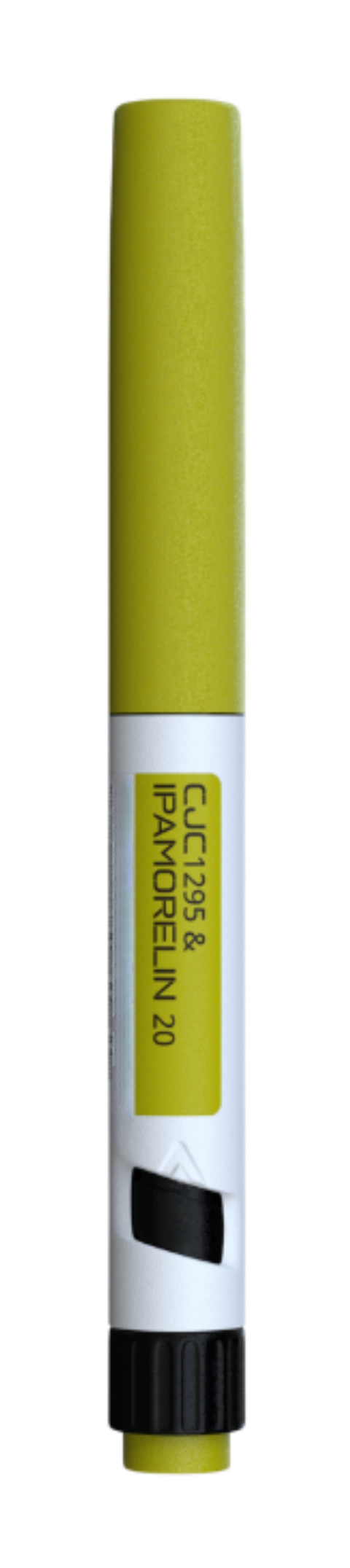
BodyPharm supplies the CJC-1295 and Ipamorelin blend as a pre-filled research pen holding 10mg of CJC-1295 (No-DAC) and 10mg of Ipamorelin, 20mg of peptide in total, tested by Janoshik and shipped with a batch-specific Certificate of Analysis that accounts for both peptides. You can read the actual Janoshik lab results for the CJC-1295 and Ipamorelin pen before you commit, rather than taking a purity claim on faith, and the product page lists the current batch and specification.
BodyPharm ships across Metro Manila and the wider Philippines with tracked, cold-chain delivery.
If this blend is one of several compounds you are sourcing, the rest of the research catalogue is documented to the same standard.
The CJC-1295 and Ipamorelin blend supplied by BodyPharm is for laboratory and in vitro research use only. It is not for human or animal consumption, is not an approved therapeutic in any jurisdiction, and nothing in this article is medical advice.
Janoshik-verified purity with the CoA published for every batch.
Frequently asked questions
Related Research
How to Read a Peptide Certificate of Analysis (COA) - HPLC Purity Explained
Learn how to read a peptide Certificate of Analysis. What HPLC purity percentages mean, how to interpret a chromatogram,...

How to Verify Peptide Purity Before Buying
Learn how to verify peptide purity using HPLC, mass spectrometry, and Certificates of Analysis. Red flags, what 98%+ pur...

Where to Buy Research Peptides in the Philippines: A Supplier Guide
How to choose a research peptide supplier in the Philippines: vetting purity and identity, reading a batch Certificate o...