Where to Buy BPC-157 / TB-500 in the Philippines: A Research Buyer's Guide
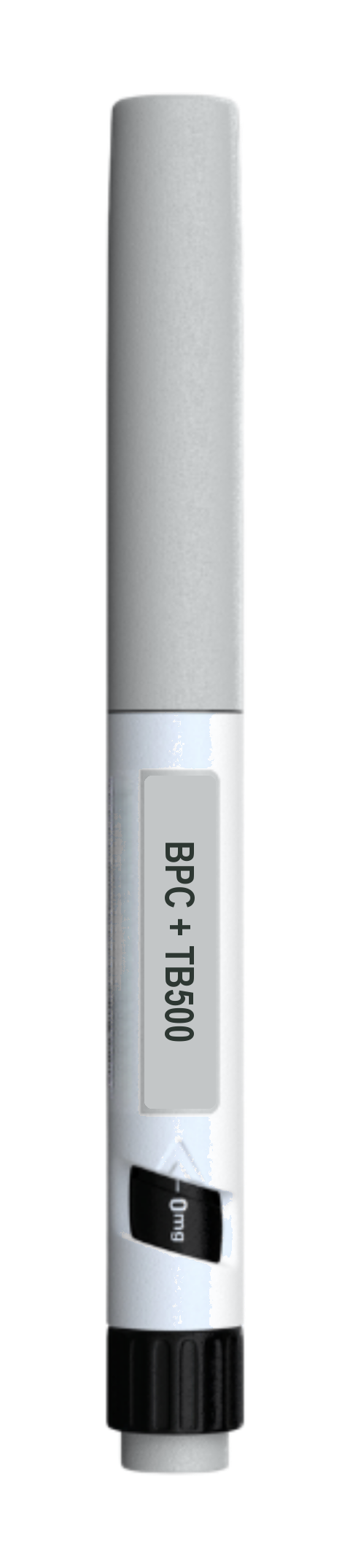
Where to buy the BPC-157 / TB-500 blend in the Philippines for research: how to vet a supplier, read a blend Certificate of Analysis, check HPLC purity for both peptides, and store it correctly. BodyPharm, research use only.
BPC-157 and TB-500 are usually sold as a pair, and that pairing creates a specific problem for anyone sourcing them. A blend has two peptides in one vial, which means twice as many ways for a seller to cut a corner and half the chance you will notice. Plenty of listings show you a single purity number, or a certificate for one peptide, and let you assume the other half of the vial is fine.
This guide covers what BPC-157 and TB-500 each are, why they get studied together, and the documentation that tells you a blend is real. It walks through reading a that has to account for two compounds, how to store the material, and what a fair price looks like. Everything here is written for laboratory and research use only.
What BPC-157 and TB-500 actually are
BPC-157 is a synthetic pentadecapeptide, meaning a chain of fifteen amino acids. That sequence is a partial fragment derived from a protein found in gastric juice, which is where the informal name "Body Protection Compound" comes from. In the research literature it turns up around tendon, ligament, and gut repair signalling.
TB-500 is a synthetic version of an active fragment of Thymosin Beta-4, a peptide that occurs naturally in the body and plays a role in actin regulation and cell migration. Where BPC-157 is associated with local repair signalling, TB-500 is studied more around how cells move and how new blood vessels form.
The reason the two are combined is that they act through complementary pathways rather than the same one. BPC-157 sits closer to the repair and angiogenesis signalling side; TB-500 sits closer to cell migration and vascularisation. Studied together as a dual tissue-repair blend, they cover ground neither peptide covers alone, which is the whole rationale behind putting them in a single research pen. We go deeper on the mechanics in the BPC-157 vs TB-500 research applications comparison.
The two things that actually matter: purity and identity
Two questions decide whether a batch is usable. Is it pure, and is it actually what the label says? With a blend, that second question doubles: you need to confirm both BPC-157 and TB-500 are present, rather than one of them padded out with the other.
Purity comes from high performance liquid chromatography (). It separates everything in the sample and reports each fraction as a percentage, so a real HPLC result gives you numbers, not a vague "high purity" line. Identity comes from (MS), which weighs the molecule and confirms it matches the expected peptide. For a blend, a proper CoA shows both peptides accounted for, each with its own purity and identity data, so you can see the ratio and confirm neither was quietly left out.
How to read a blend CoA in under a minute
A Certificate of Analysis (CoA) is the lab report for one production batch. Checking one does not take an analytical chemist. For a two-peptide blend, look for these:
- A batch or lot number that matches the vial you are buying. A generic CoA for "BPC-157 / TB-500" in the abstract is not a CoA for your material.
- HPLC purity for both peptides, each stated as a percentage. One number for the blend as a whole hides which peptide is carrying it.
- Mass spectrometry confirming both identities. This is the half that proves both compounds are actually in the vial.
- A test date. A CoA reused across every batch for years is a paperwork exercise, not verification.
- The testing lab's name. Independent, third-party testing means a lab with no stake in the result did the work. Our full CoA walkthrough goes line by line.
The name that comes up most in this space is Janoshik Analytical, a European lab used widely across the research peptide industry because its reports can be checked through its own portal. A Janoshik report you can independently look up beats an unbranded PDF you have to take on trust.
Storage and handling, briefly
The blend ships lyophilised, freeze dried into a small pellet or film. In that state it is reasonably stable, but it is not indestructible. Keep unopened vials refrigerated at 2 to 8 degrees Celsius and out of the light. Once reconstituted with bacteriostatic water it has to stay refrigerated and be used within a few weeks. Material that spends two days on a hot courier dashboard is how a strong CoA turns into weak bench results, which is why shipping practice matters as much as the paperwork.
What a fair price looks like
Price is a signal, and the loudest version of it is the listing far cheaper than everyone else. Making genuinely pure peptides and paying an independent lab to test every batch, two peptides in this case, costs money. A supplier doing both cannot also be the cheapest on the market by a wide margin. When a price looks too good to be true, the usual explanations are underdosed vials, a skewed ratio between the two peptides, an older batch, or material that was never independently tested. None of those are a bargain once you count the ruined experiment.
The most expensive listing is not automatically the best either. What you pay for is verified purity on both compounds, honest documentation, and material that arrives in the condition the CoA describes. Judge a price against those, not against the lowest number you can find.
Red flags worth walking away from
Buying BPC-157 / TB-500 from BodyPharm
BodyPharm supplies the BPC-157 and TB-500 blend as a pre-filled 32mg research pen, tested by Janoshik and shipped with a batch-specific Certificate of Analysis that accounts for both peptides. You can read the actual Janoshik lab results for the BPC-157 / TB-500 pen before you commit, rather than taking a purity claim on faith, and the product page lists the current batch and specification.
BodyPharm ships across Metro Manila and the wider Philippines with tracked, cold-chain delivery.
If this blend is one of several compounds you are sourcing, the rest of the research catalogue is documented to the same standard. If you are comparing markets, our guide on where to buy peptides in the USA applies the same checks.
The BPC-157 / TB-500 blend supplied by BodyPharm is for laboratory and in vitro research use only. It is not for human or animal consumption, is not an approved therapeutic in any jurisdiction, and nothing in this article is medical advice.
Janoshik-verified purity with the CoA published for every batch.
Frequently asked questions
Related Research

BPC-157 vs TB-500 - Research Applications Compared
A research-context comparison of BPC-157 and TB-500. Their distinct mechanisms, receptor targets, research literature, a...
How to Read a Peptide Certificate of Analysis (COA) - HPLC Purity Explained
Learn how to read a peptide Certificate of Analysis. What HPLC purity percentages mean, how to interpret a chromatogram,...

Where to Buy Research Peptides in the Philippines: A Supplier Guide
How to choose a research peptide supplier in the Philippines: vetting purity and identity, reading a batch Certificate o...